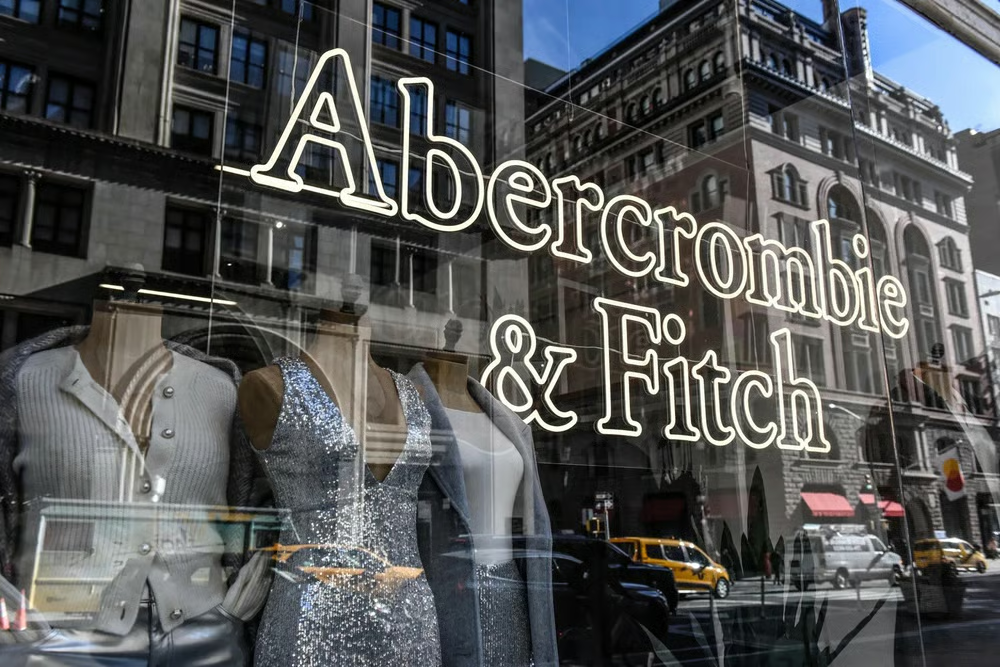
Abercrombie Tariff Outlook moved into focus after the apparel retailer projected modest sales growth while accounting for new US import tariffs. The company said its financial guidance now includes the impact of a 15 percent tariff on goods entering the United States. The update highlights how trade policy continues to influence the retail sector.
Investors reacted quickly. Shares of Abercrombie & Fitch fell about 7 percent in premarket trading after the announcement. The decline reflected concerns that higher import costs could pressure margins. Retailers are already navigating cautious consumer spending and higher operating costs.
The updated Abercrombie Tariff Outlook follows a shift in US trade policy. President Donald Trump said in late February that the government would raise a temporary tariff from 10 percent to 15 percent. The adjustment came after a Supreme Court decision struck down broader tariffs introduced under the International Emergency Economic Powers Act.
The new rate represents the highest level allowed under the current law. However, it remains lower than some earlier trade penalties imposed in previous years. Even so, the change forces retailers to reassess financial forecasts.
Retail companies have taken different approaches when responding to tariff uncertainty. Some firms decided not to include tariff effects in their guidance. They argue that the policy environment remains unpredictable.
Swiss footwear company On Holding and electronics retailer Best Buy followed that strategy. Both companies excluded tariffs from their annual outlooks. They cited unstable global trade conditions. At the same time, they acknowledged that tariff levels appear lower than last year.
Abercrombie took a different path. The company incorporated tariff costs directly into its projections. Executives said the guidance assumes a 15 percent duty on goods imported into the United States. The estimate follows an announcement made by the US administration on February 21.
Treasury Secretary Scott Bessent said the temporary tariff rate could take effect this week. The new policy would apply broadly to imported goods. However, the rate remains lower than earlier duties imposed on specific countries.
Last year, the United States placed additional tariffs of 20 percent on imports from nations such as Vietnam and Indonesia. These countries are major sourcing hubs for apparel companies. Many global fashion brands depend on factories in those regions.
The supply chain impact is significant. Apparel retailers rely on overseas production to control costs. When tariffs rise, companies face difficult choices. They may absorb higher expenses, raise retail prices or shift manufacturing to new locations.
For Abercrombie, the Abercrombie Tariff Outlook directly shapes expectations for the coming year. The retailer now projects net sales growth between 3 percent and 5 percent for fiscal 2026. Analysts had expected slightly stronger performance.
Data compiled by market researchers suggested a consensus growth forecast of about 4.2 percent. Abercrombie’s projection therefore sits slightly below expectations. Investors often interpret such cautious guidance as a signal of slower demand.
Despite the modest sales outlook, the company offered stronger earnings guidance. Abercrombie expects annual net income per share between $10.20 and $11. The midpoint of that range exceeds the average analyst estimate of $10.36.
Company executives said tariffs would affect results but remain manageable. According to the forecast, tariffs will account for about 70 basis points of net sales this year. That estimate reflects the direct cost of import duties.
The projection does not include any potential refunds tied to earlier tariffs. The Supreme Court recently struck down those duties. Companies may still recover part of those costs depending on legal and administrative outcomes.
Earlier guidance suggested a larger tariff impact. At the start of the year, Abercrombie warned that duties could affect sales by about 170 basis points in 2025. That forecast reflected greater uncertainty about trade policy.
The smaller impact expected now suggests some adjustment in sourcing strategies. Apparel companies often move production between countries to reduce exposure to tariffs. Supply chains across Asia remain flexible for that reason.
Still, uncertainty remains. Global retail supply chains continue to evolve. Trade tensions, policy changes and economic pressures affect manufacturing decisions. Retailers must adapt quickly to these shifts.
The Abercrombie Tariff Outlook illustrates how tariffs now shape corporate planning. Financial guidance once focused mainly on consumer demand. Today it also reflects geopolitical policy and global trade dynamics.
Executives appear to favor transparency. By including tariffs in the outlook, the company gives investors a clearer picture of expected costs. Some companies avoid this approach. They prefer to wait until policies become clearer.
The coming months will determine whether current projections hold. If tariffs remain stable, retailers can adjust sourcing and pricing strategies. If trade tensions escalate, companies may need to revise forecasts again.
For now, Abercrombie expects steady but measured growth. The company continues to expand its global brand presence while managing supply chain risks. The Abercrombie Tariff Outlook shows how trade policy has become a key factor in modern retail strategy.