Radar People Counting is reshaping how businesses track visitors in public spaces as privacy regulation tightens worldwide. Retail managers, property operators and city planners have long relied on visitor counts to guide staffing decisions, safety planning and store layouts. For years that role fell to camera analytics systems that could track movement through visual recognition. Today the technology landscape is shifting as organisations seek tools that deliver insights without collecting personal data.
Across Europe and increasingly in global markets influenced by strict privacy standards, the surveillance model built around cameras has become harder to justify. Companies now face mounting compliance obligations tied to data protection laws. At the same time, public sensitivity to visible surveillance has grown. These forces are pushing businesses toward new sensing technologies that prioritise anonymity while still producing reliable operational intelligence.
The emerging alternative relies on radar. In particular, Radar People Counting systems using millimetre wave sensors allow organisations to measure visitor flow without recording images, facial features or other personally identifiable details. Instead of video feeds, these sensors analyse radio wave reflections to detect motion and movement patterns. The result is a data stream that reveals traffic volumes but contains no identifiable personal information.
The shift from cameras to radar reflects a broader transformation in how companies approach analytics infrastructure. Camera systems were originally deployed as visual monitoring tools that later evolved into analytics platforms. In contrast, radar solutions begin with the assumption that the system should minimise data collection. Rather than capturing everything and filtering it later, they collect only the signals needed to measure occupancy and movement.
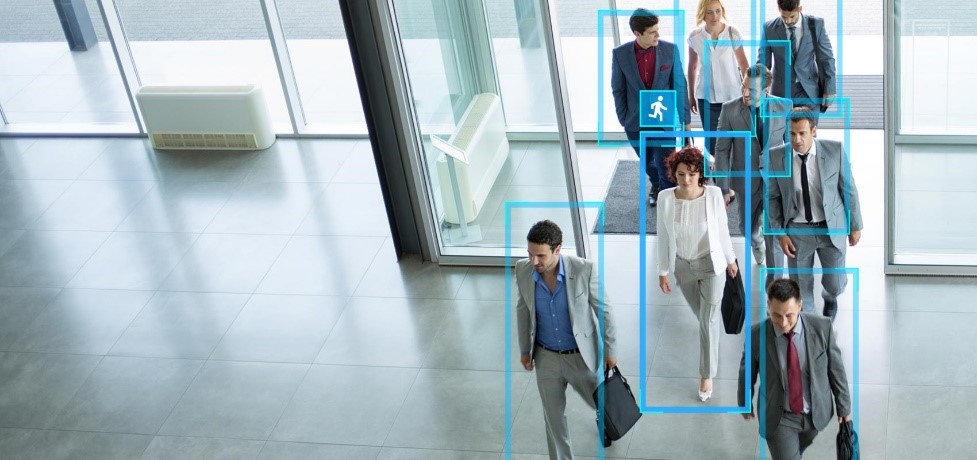
Traditional camera based analytics deliver detailed visual data, but that capability comes with legal and operational complexity. When a store records video of visitors, it often becomes a data controller under privacy regulations. That designation introduces responsibilities around consent, secure storage and restricted access to recorded footage. Organisations must implement strict policies governing how long data is retained and who can view it.
Compliance requirements also create friction for everyday operations. Businesses frequently need signage informing visitors that cameras are recording activity. Privacy policies must be made available at service desks or through digital notices. These measures meet regulatory requirements but can undermine customer comfort. When people see surveillance warnings, they may alter behaviour or avoid monitored spaces entirely.
The distortion of visitor behaviour is not trivial. If customers actively avoid areas under heavy camera coverage, the resulting analytics become less reliable. Traffic patterns no longer reflect natural movement within a store or public facility. Managers then make decisions based on incomplete or skewed information.
Operational reliability poses another challenge. Camera systems require regular maintenance and calibration. Lenses must remain clean and properly aligned. Lighting conditions also affect performance, especially in environments with direct sunlight or rapidly changing brightness levels. Outdoor cameras face additional disruption from weather, dust and reflections. These factors introduce gaps in analytics that businesses must address through manual oversight.
By contrast, Radar People Counting systems rely on radio signals rather than visual capture. Sensors typically operate in the 60 gigahertz millimetre wave spectrum, emitting low power signals that bounce off objects within their coverage area. When those waves reflect from moving bodies, the sensor analyses the signal changes to determine motion direction and distance.
Because the system does not record images, it cannot identify individuals. Instead it registers movement events. The sensor processes the signal locally and generates anonymous counts of people entering or exiting a defined area. These aggregated metrics can then be transmitted to a central dashboard or stored in local infrastructure for analysis.
The architecture reflects a growing emphasis on edge processing within the Internet of Things. Rather than sending raw data to remote servers for interpretation, sensors perform analysis directly on the device. Only summarised insights move across the network. This approach reduces bandwidth demands and limits the amount of data stored or transmitted.
For organisations managing large property portfolios, the infrastructure implications are significant. Video analytics systems require high capacity networks and large storage environments capable of handling continuous video streams. Radar sensors transmit only numerical events and aggregated counts. As a result, deployments scale more easily across multiple locations.
Maintenance requirements are also lower. Most radar sensors are compact units mounted on walls or ceilings. Once connected to power and network access, they operate with minimal intervention. There are no lenses to clean and no camera angles to adjust. Lighting conditions do not affect signal accuracy, allowing the sensors to perform consistently in both bright and dim environments.
Coverage efficiency adds another advantage. A single radar unit with a ten metre range and a wide detection angle can monitor a large area such as a retail entrance or corridor. This means fewer devices are needed to achieve full visibility across a building. Lower hardware counts reduce installation costs and simplify system management.
The operational value of Radar People Counting becomes particularly clear when businesses examine real time occupancy trends. Sensors continuously analyse movement and report aggregated visitor numbers at regular intervals. Depending on configuration, updates may occur every few minutes or in near real time.
This data helps managers respond quickly to changing conditions. If occupancy rises during a promotional event, additional staff can be assigned to service counters or fitting rooms. Facilities teams can also monitor capacity levels to ensure compliance with safety regulations during busy periods.
Longer term analytics reveal deeper patterns. Over weeks and months, aggregated data shows how traffic fluctuates by hour, day or season. Retail operators can use these insights to optimise store layouts, schedule staffing levels and evaluate the effectiveness of marketing campaigns. Public facilities can track usage patterns to plan maintenance or improve crowd management strategies.
Crucially, these insights emerge without collecting personal information. The system observes movement but never records identity. That distinction allows organisations to maintain compliance with strict privacy frameworks while still benefiting from advanced analytics.
The rise of Radar People Counting therefore reflects more than a technological upgrade. It represents a shift toward data minimisation as a design principle within modern IoT systems. Instead of building analytics around maximum data collection, developers increasingly design sensors that gather only the information required to answer a specific operational question.
As privacy regulations continue to expand globally, this model may become the default architecture for smart buildings and retail analytics. Businesses gain the insights needed to run operations efficiently while avoiding the reputational and legal risks associated with large scale personal data collection. In that sense, radar based sensing signals a maturation of the IoT industry toward infrastructure that delivers intelligence without surveillance.