The retail industry is entering 2026 under mounting pressure and rapid transformation. Economic uncertainty, changing consumer behavior, advances in artificial intelligence, and evolving real estate models are reshaping how retailers operate and compete. While 2025 was marked by tariff volatility and aggressive experimentation with generative AI, the year ahead looks even more complex, with fewer certainties and higher stakes.
Retail leaders are navigating a landscape defined by uneven consumer spending, cautious investment activity, and structural shifts in how people shop, receive goods, and interact with brands. From pricing transparency to the reimagining of malls, these are the six retail trends expected to define 2026.
Retail trends to watch in 2026 at a glance
| Trend | What’s changing in 2026 |
|---|---|
| AI adoption | Retail AI use grows, but pressure mounts to prove ROI |
| Consumer value focus | Shoppers prioritize value and essentials over discretionary spend |
| Mall evolution | Malls shift toward mixed-use and experiential models |
| Pricing scrutiny | Algorithmic pricing faces regulatory and consumer pushback |
| Delivery speed | Same-day and ultra-fast delivery become competitive necessities |
| Tariff impact | Higher costs ripple through supply chains and pricing |
AI adoption grows, but returns face scrutiny
Artificial intelligence will continue expanding across retail in 2026, but the conversation is shifting from experimentation to measurable results. Consumers are increasingly using AI tools for product discovery, comparisons, and recommendations, driving higher AI-related traffic to retail platforms. At the same time, retailers are under pressure to justify growing AI investments.
Retail has historically lagged behind other sectors in AI adoption due to operational complexity and reliance on physical goods. Studies from academic and industry groups suggest a widening gap between retailers that deeply integrate generative AI into operations and those that treat it as a peripheral tool. While daily AI usage is rising across industries, retail still faces skepticism internally, especially around cost, data governance, and integration challenges.
In 2026, successful retailers will be those that move beyond pilots and deploy AI in revenue-driving areas such as demand forecasting, pricing optimization, customer service automation, and personalized marketing. The key challenge will be demonstrating clear financial returns, particularly as margins remain under pressure.
Consumers continue to prioritize value
Shoppers in 2026 are expected to look much like they did in 2025: cautious, budget-conscious, and increasingly selective. A weakening job market, rising healthcare costs, and slower wage growth are squeezing discretionary spending, even as overall consumption remains resilient.
Economic forecasts suggest consumer spending growth will slow compared to previous years. Wage gains are expected to hover just above inflation, limiting real income growth. As a result, more households are shifting spending toward essentials and seeking out retailers known for value and price stability.
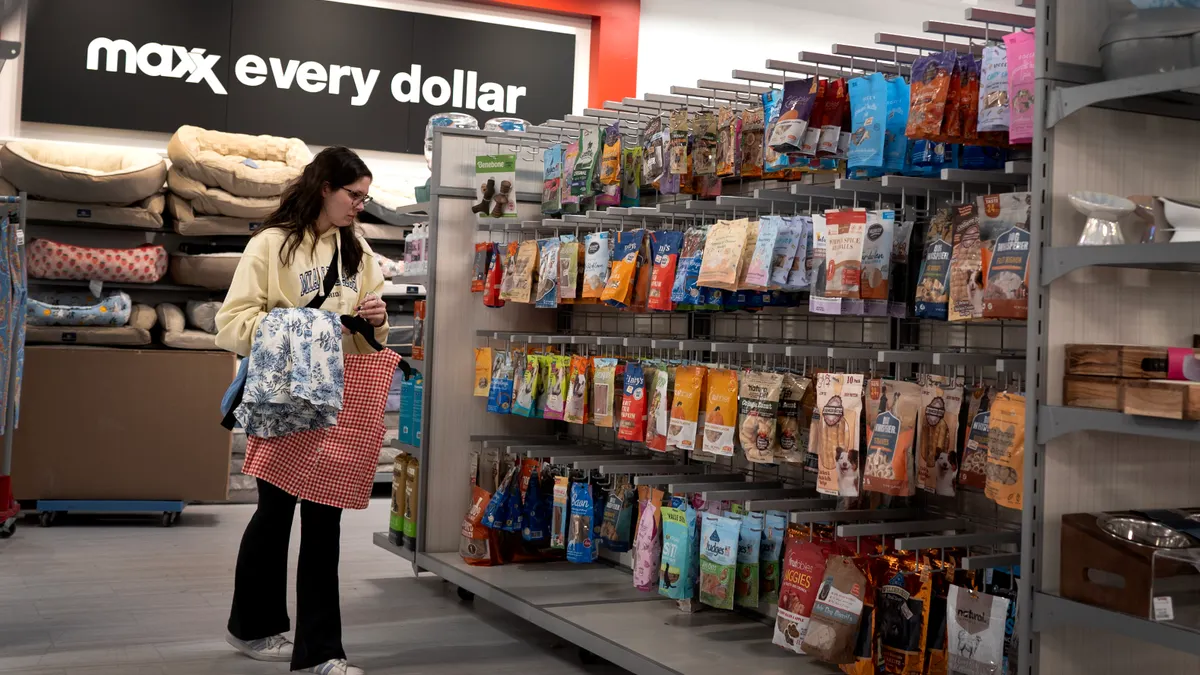
This trend continues to favor mass merchants, warehouse clubs, and discount retailers. Companies that clearly communicate value, whether through pricing, private labels, or service differentiation, are expected to gain market share. According to industry analysts, retailers with strong supply chains, efficient store networks, healthy cash flow, and loyal customer bases are best positioned to outperform in this environment.
Malls enter a new evolutionary phase
After years of pessimism, malls are undergoing a quieter but meaningful transformation. Rather than returning to their former role as purely retail destinations, many shopping centers are being reimagined as mixed-use hubs that combine retail with residential, office, entertainment, healthcare, and community services.
Investment activity from companies such as Simon Property Group, Walmart, and major department stores signals renewed confidence in select mall properties. Even B-rated malls are increasingly viewed as assets with reinvention potential, rather than liabilities in long-term decline.
In 2026, the most successful malls will not be defined by how much retail they contain, but by how effectively retail anchors a broader ecosystem of uses. Many of these developments may no longer resemble traditional malls at all, reflecting a fundamental reclassification of what retail real estate can be.
Pricing practices face growing scrutiny
Pricing will remain a sensitive and closely watched issue in 2026. Consumers are more aware of how prices fluctuate online and in-store, particularly as algorithmic and AI-driven pricing tools become more common.
Regulators are responding to these concerns. New disclosure laws, such as those requiring businesses to notify consumers when personalized or algorithmic pricing is used, are setting precedents that other regions may follow. Legal experts expect additional scrutiny around AI-driven pricing systems, especially where personal data or location-based adjustments are involved.
Retailers adopting dynamic pricing tools will need to ensure transparency, fairness, and compliance. Best practices include avoiding price changes based on sensitive personal data, using aggregated or de-identified information, and ensuring that location-based pricing reflects legitimate market conditions rather than historical bias.
Fast delivery becomes even faster
Speed remains one of the most powerful differentiators in retail, and delivery expectations are rising again in 2026. Big-box retailers and e-commerce giants are investing heavily in same-day and near-instant fulfillment as a way to capture demand and reduce friction.
Amazon continues to expand its fulfillment network, testing delivery windows as short as 30 minutes in select markets. These efforts are reshaping consumer expectations, particularly for everyday and perishable items.
Other major retailers are responding with multi-channel fulfillment strategies that leverage stores, warehouses, clubs, and emerging technologies such as drones. Immediacy remains a key reason consumers choose physical stores over online shopping, but ultra-fast delivery increasingly rivals that advantage. In 2026, delivery speed will be less of a premium feature and more of a baseline expectation.
Tariffs continue to disrupt retail economics
Trade policy uncertainty remains a defining challenge for retail in 2026. While many companies took steps in 2025 to diversify supply chains and pull forward inventory ahead of tariff increases, those buffers may not last indefinitely.
As forward-bought inventory runs down, retailers may face higher costs on new merchandise. Industry experts warn that these increased costs will eventually be passed on to consumers, contributing to price inflation in select categories.
Several major brands have already acknowledged tariff-driven cost increases and announced price adjustments. In 2026, retailers will need to balance margin protection with consumer sensitivity, carefully managing inventory, sourcing strategies, and pricing communication.
Looking ahead to retail in 2026
The retail industry in 2026 will be shaped less by a single dominant trend and more by the interaction of economic pressure, technological change, and shifting consumer expectations. AI will continue advancing, but its value must be proven. Consumers will keep spending, but with sharper focus on value. Malls will evolve rather than disappear, pricing will face new rules, delivery will get faster, and tariffs will remain an unpredictable force.
For retailers, 2026 represents a critical moment to reassess portfolios, double down on strengths, and invest strategically in capabilities that support resilience and differentiation. Those that adapt quickly and thoughtfully will be best positioned to navigate what promises to be another demanding but opportunity-rich year.