More young Indians—including graduates with international degrees—are now choosing retail training for young Indians as a smart launchpad for their careers. Instead of waiting for corporate roles, they’re heading straight to the shop floor. Why? Because they’ve realized that real-world experience often teaches more than textbooks ever can.
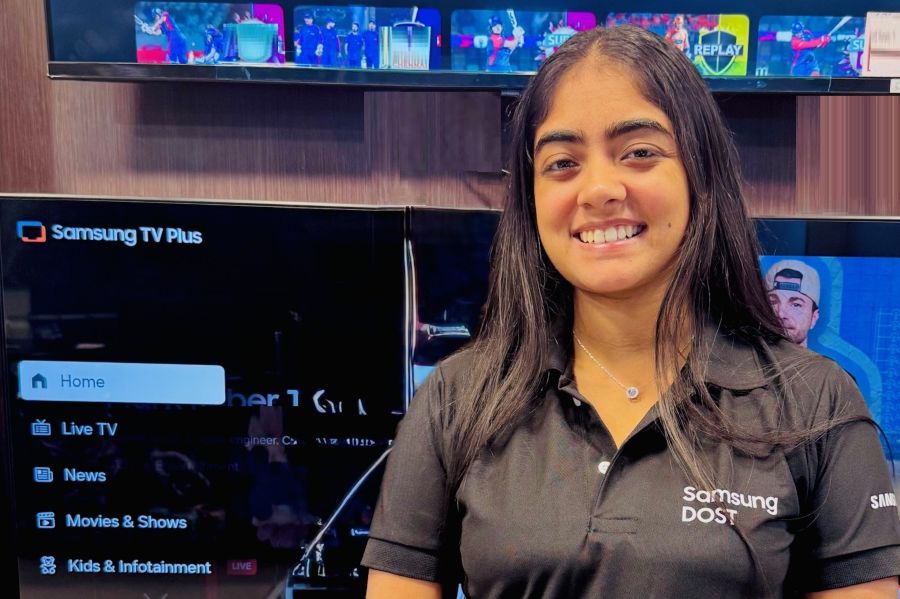
Take Samsung’s DOST Sales Programme. It offers structured retail training that blends classroom lessons with actual store work. Participants learn customer engagement, product knowledge, communication, and retail operations. And these skills matter more than ever, as India’s organised retail shifts from simple transactions to building trust and solving real problems.
In fact, the 2026 DOST cohort includes people from all kinds of academic backgrounds—even those who studied abroad. Many say they joined to build confidence and sharpen decision-making skills that formal education alone couldn’t give them. After all, no lecture can fully prepare you for a frustrated customer or a last-minute product demo.
Quazi Faizan Afroz Akhlaque Uz Zama, an MBA graduate from Amravati University, put it this way: “Through training and hands-on exposure, I learned how to communicate with customers, manage tough situations, and make quick, informed decisions. Understanding customer behaviour and product differences gave me clarity and confidence.” So for him, the shop floor became his real MBA classroom.
Others with global education agree. Rashneet Kaur Chhabra, a University College London graduate now training in Pune, shared: “The diversity in the programme—across age, background, and experience—helped me see business through a human lens. In India, retail is deeply personal. Trust and cultural connection drive sales. That’s a lesson I’ll carry into global markets.” Even though she studied overseas, she chose to start at ground level—and she’s glad she did.
Industry leaders say this shift fills a major gap. Shubham Mukherjee, Head of CSR & Corporate Communications at Samsung Southwest Asia, explained: “Our five-month DOST framework creates job-ready talent for today’s retail world. The surge in enrolments—including candidates with international degrees—shows how relevant this path has become.” Moreover, he added, “As digital transformation reshapes retail, we need people who can blend tech with human touch.”
As a result, frontline experience is no longer seen as a fallback—it’s becoming a strategic choice. And as India’s retail economy grows, programmes like DOST are turning into vital bridges between education and employment. They prove that selling isn’t just about products; it’s about listening, adapting, and connecting.
Therefore, for many young professionals, retail training for young Indians isn’t just about selling phones. It’s about building emotional intelligence, resilience, and practical judgment—skills that last a lifetime, whether they stay in retail or move into global leadership.